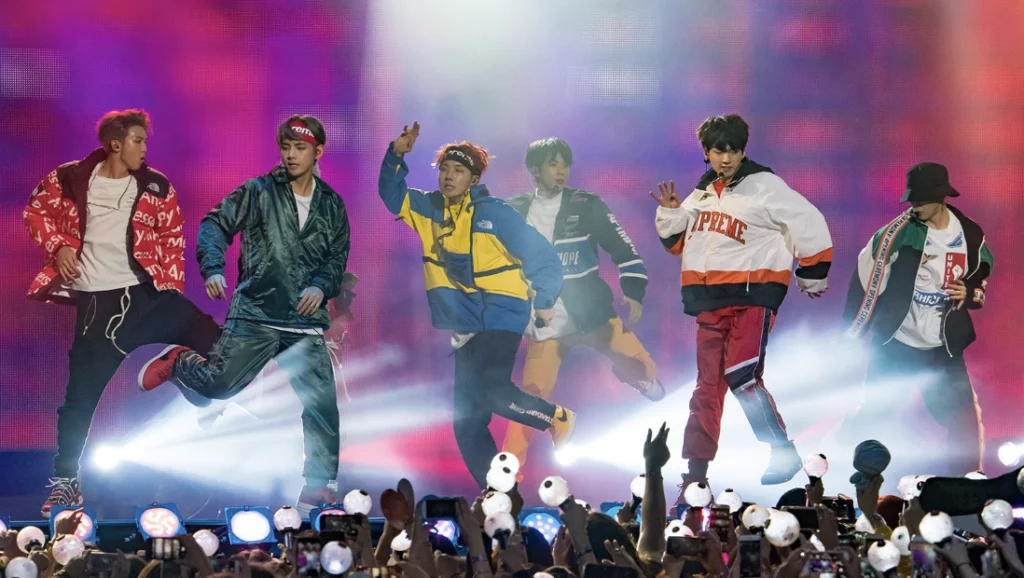
K-pop concert evolution has transformed the entertainment landscape by pioneering hybrid experiences that blend immersive virtual technology with spectacular in-person performances, creating unprecedented global accessibility while raising questions about digital equity and environmental sustainability.
K-pop Virtual Concerts Revolutionize Global Fan Engagement Through Technological Innovation
The evolution of K-pop concerts represents one of the music industry’s most fascinating transformations, particularly in how virtual shows have complemented traditional touring models rather than replacing them. When the pandemic halted worldwide touring, K-pop agencies didn’t merely pivot online—they revolutionized the virtual concert experience entirely. SM Entertainment’s “Beyond LIVE” platform, launched in April 2020, pioneered advanced augmented reality, multi-view camera systems, and real-time fan interaction that generated $2 million in revenue from NCT 127’s inaugural show alone. By 2023, HYBE’s February “WEVERSE CON” virtual event for BTS attracted over 15 million concurrent viewers worldwide, demolishing previous streaming records. What differentiates K-pop virtual concerts from typical livestreams is their technological sophistication; BLACKPINK’s 2023 “BORN PINK VIRTUAL” featured volumetric capture technology that created three-dimensional holograms of members performing in virtual environments that would be physically impossible on traditional stages, with fans reporting an uncanny sense of presence despite the digital medium. These aren’t merely concerts broadcast online—they’re meticulously designed immersive experiences that combine real-time fan interaction, customizable viewing angles, augmented reality elements, and synchronized light sticks that transform fans’ homes into extensions of the concert venue.
The economic model behind these virtual innovations has proven remarkably sustainable, though not without challenges. While Western artists typically charge $15-30 for livestream access, major K-pop virtual concerts operate on tiered pricing systems ranging from $30 basic viewing packages to $150 premium experiences offering virtual meet-and-greets, exclusive merchandise, and interactive elements. TWICE’s 2022 “SECOND WORLD” virtual concert not only sold 400,000 tickets across payment tiers but generated additional revenue through virtual goods—fans purchased over 1.2 million digital light sticks, custom avatars, and virtual photo opportunities that reportedly accounted for 40% of the event’s total revenue. This monetization model, however, has sparked debate about economic accessibility; fan advocacy groups like “KpopForAll” have criticized the increasingly complex pricing tiers as creating a “digital caste system” within fandoms. Furthermore, while these digital experiences offer unprecedented accessibility, they also highlight digital divide issues; aespa’s 2023 virtual concert “SYNK: PARALLEL LINE” was simultaneously translated into 12 languages through AI technology and offered adaptive features for hearing-impaired fans, yet required high-speed internet and modern devices that remain inaccessible in many regions. Despite these concerns, analytics reveal that 68% of attendees for major K-pop virtual concerts are accessing from regions rarely included in physical world tours, especially from Southeast Asia, South America, and Eastern Europe, demonstrating how virtual formats have democratized access to K-pop performances while creating sustainable revenue streams from previously underserved markets.
K-pop Stadium Tours Expand Global Market Reach Through Spectacular Production Value
Despite the digital revolution, K-pop’s in-person concert market has not diminished but rather expanded in unprecedented ways. The staggering success of BTS’s “PERMISSION TO DANCE ON STAGE” stadium tour, which grossed over $75 million from just eight shows in 2022, demonstrated that physical performances remain the industry’s crown jewel. What sets contemporary K-pop tours apart is their production scale; SEVENTEEN’s 2023 “FOLLOW” tour included a 100-foot-wide LED stage system requiring 18 transport trucks—comparable to infrastructure typically reserved for the world’s largest pop stars. TXT’s 2024 “ACT: PROMISE” tour implemented programmable drone formations creating elaborate airborne light displays synchronized to music, a technology previously unseen at this scale in concert settings. These spectacular productions come with significant environmental costs—according to a 2023 Korea Environment Institute study, a typical stadium-level K-pop concert generates approximately 32 tons of carbon emissions per show, with international tours multiplying this impact substantially. While industry leaders like SM Entertainment and HYBE have announced carbon offset programs, critics argue these measures address symptoms rather than underlying sustainability challenges inherent to the massive production values that have become synonymous with K-pop performances.
The economic geography of K-pop touring has also undergone dramatic evolution, with pronounced regional differences in how concerts are received and marketed. Where agencies once concentrated on East Asian markets, contemporary K-pop tours have systematically expanded global footprints—sometimes controversially. ENHYPEN’s 2023 world tour made headlines by allocating 65% of performances to North and South America, reflecting a conscious strategy to penetrate Western markets, while smaller groups like KARD have pioneered Latin American circuit development with extensive tours through previously overlooked markets like Peru, Chile and Colombia. Mid-tier agencies like Jellyfish Entertainment (with VERIVERY) and KQ Entertainment (with ATEEZ) have found particular success with European touring circuits, where production costs are typically 15-20% lower than in North America while ticket pricing remains comparable. Meanwhile, TREASURE’s 2023 “HELLO” tour broke new ground by becoming the first K-pop act to perform in emerging markets including Kazakhstan, Azerbaijan, and Qatar. This geographic expansion comes with considerable financial rewards that vary significantly by region; according to Live Nation data, average ticket prices for major K-pop concerts increased 78% between 2019 and 2023, with STRAY KIDS’ North American arena shows commanding an average ticket price of $214, compared to $185 in Western Europe, $120 in Southeast Asia, and $90 in Latin America—creating regional price discrimination that often reflects economic realities while sometimes reinforcing global inequalities. Industry analysts attribute these premium pricing structures to the scarcity principle; with performances requiring years of anticipation in many markets, fans willingly pay premium prices for experiences they’ve long awaited. Yet alongside traditional touring models, innovative hybrid formats have emerged to address accessibility concerns. ITZY’s 2023 “CHECKMATE” tour introduced “connected concerts” where selected performances were simultaneously broadcast to theater venues in 50 additional cities, allowing fans in non-tour markets to experience partial participation through live reactions visible to performing artists.
K-pop Concert Technology Integration Creates Unprecedented Fan Experience Personalization
The true innovation in contemporary K-pop concerts lies in dissolving boundaries between virtual and physical experiences, though this integration raises questions about authenticity and the future of live performance. The emerging model leverages technology to create deeply personalized experiences regardless of format. TOMORROW X TOGETHER’s 2023 tour pioneered the “digital twin” concept, where fans attending physical shows could also access a synchronized virtual companion experience on their smartphones, offering exclusive camera angles, real-time translations, and augmented reality elements invisible to the naked eye but viewable through phone screens at specific moments during performances. This approach sparked debate among performance purists who question whether such technology enhances or distracts from the authentic concert experience—a debate that continues within fan communities. NewJeans’ 2024 “BUBBLE BATH” tour integrated blockchain verification for both physical and virtual attendance, recording concert participation as permanent digital assets that unlock evolving benefits over time—fundamentally redefining the concert from a single event into an ongoing relationship between artist and attendee. Similarly, RED VELVET’s recent performances utilized facial recognition and artificial intelligence to analyze audience emotional responses throughout shows, dynamically adjusting lighting, sound levels, and even spontaneously modifying setlists based on real-time audience engagement metrics—creating uniquely responsive performances that evolve with each venue’s collective reactions, while simultaneously raising privacy concerns that remain largely unaddressed in public discourse.
While major entertainment companies drive many of these innovations, smaller agencies and independent artists have found creative ways to participate in this evolution with more limited resources. For instance, lesser-known groups like KINGDOM (from GF Entertainment) and PIXY (from Allart Entertainment) have collaborated to share production costs for joint showcase tours featuring scaled-down versions of the technological elements pioneered by larger companies. Meanwhile, P NATION artists like Dawn have experimented with micro-venue augmented reality performances where minimal physical staging is dramatically enhanced through smartphone AR overlays, creating immersive experiences at a fraction of the cost of large-scale productions. These alternative approaches demonstrate how K-pop’s concert evolution extends beyond just top-tier artists to influence the broader industry ecosystem.
What distinguishes K-pop’s approach from broader industry trends is the philosophical framework underpinning these innovations. Rather than viewing virtual concerts as mere substitutes for physical experiences, K-pop agencies have reconceptualized them as complementary modalities serving different audience needs while extending the same core emotional connection. JYP Entertainment’s 2024 strategic blueprint explicitly outlines three concert categories—premium in-person experiences, mass-accessible virtual shows, and hybrid connected events—as equally important components of their artist development strategy. This integrated approach has yielded remarkable financial results; the four largest K-pop agencies reported combined concert revenue exceeding $1.2 billion in 2023, with virtual events contributing approximately 31% of that total according to Korea Creative Content Agency data. Looking ahead to 2025-2027, industry forecasts from the Korea Institute of Culture and Tourism suggest several distinct evolutionary paths for K-pop concerts:
- Environmental recalibration – A predicted 25% reduction in the physical footprint of touring productions as companies respond to growing sustainability concerns, with HYBE, SM and YG all having committed to carbon-neutral touring by 2030.
- Market-specific formats – The development of region-specific concert variations tailored to local preferences and infrastructure, with Latin American tours emphasizing community engagement, European tours focusing on theatrical production values, and Southeast Asian tours maximizing fan interaction opportunities.
- Technological stratification – The emergence of a multi-tier virtual concert ecosystem spanning from mass-market basic experiences to ultra-premium individualized virtual performances, potentially exacerbating concerns about economic access and fan inequality.
- Artificial intelligence integration – HYBE’s experimental “YOU:NIVERSE” platform, currently in limited testing, allows fans to experience AI-generated permutations of past concerts with personalized viewpoints and theoretically infinite variations of the same performance, potentially transforming concerts from standardized events into individualized experiences shaped by each viewer’s preferences. This raises profound questions about authenticity and artist control that remain unresolved.
This evolution represents not merely a technological shift but a fundamental reconceptualization of what a “concert” can be—whether experienced in person or virtually—and demonstrates how K-pop continues to reimagine the relationship between performers, audiences, and the increasingly blurred boundary between physical and digital entertainment spaces. As these trends accelerate, the industry faces critical choices about balancing innovation with sustainability, accessibility with monetization, and technological spectacle with authentic human connection—choices that will likely define the next decade of K-pop concert evolution.