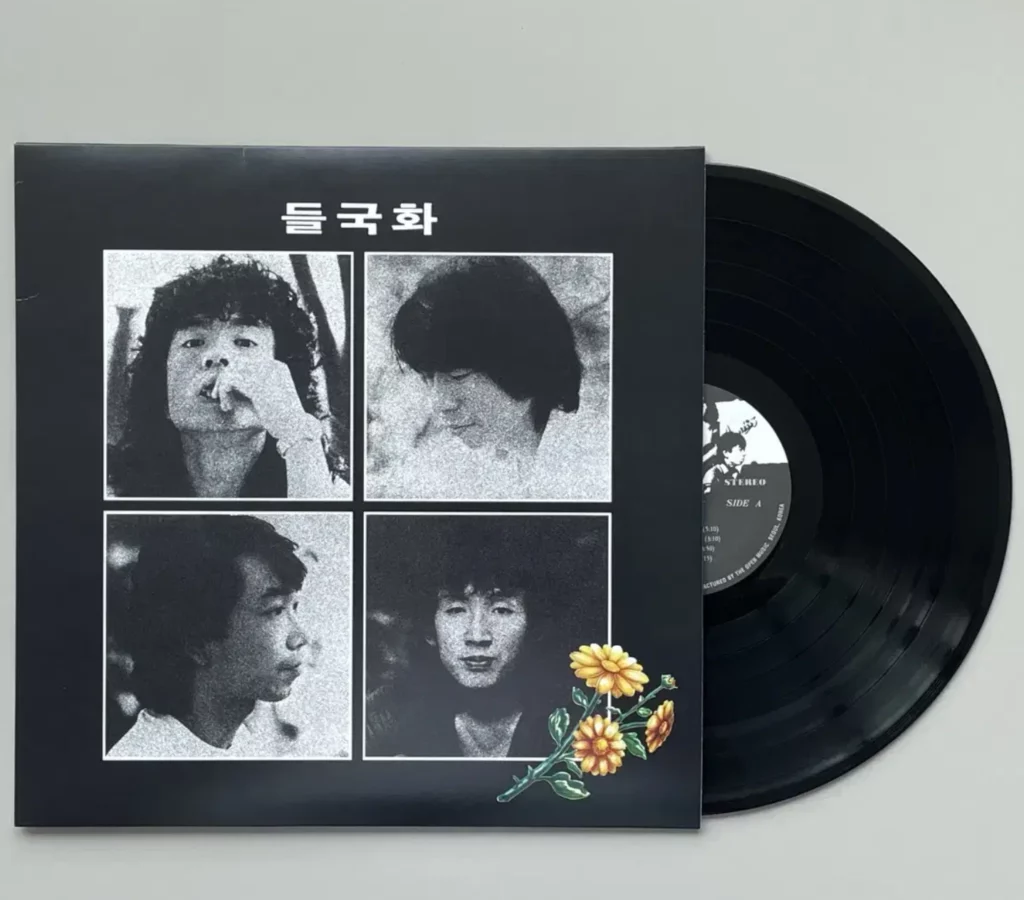
K-pop Deulgukhwa Legacy: How Korea’s Rock Pioneers Shaped Modern Music CultureDeulgukhwa’s revolutionary approach to rock music created a foundation for Korean musical innovation that continues to influence contemporary K-pop, establishing artistic standards that transcend generations and reshape how we understand Korean popular music development.
The Iconic Rise of Korea’s Most Influential Rock Band
When discussing the foundations of modern K-pop, many international fans might immediately think of Seo Taiji and Boys or first-generation idol groups. However, true Korean music connoisseurs understand that Deulgukhwa (들국화, meaning “wild chrysanthemum”) stands as perhaps the most significant cornerstone in the evolution of Korean popular music. Formed in 1985, this pioneering rock band transformed the landscape of Korean music during a period of significant social and political change. The core lineup—consisting of vocalist Jeon In-kwon, guitarist Choi Sung-won, and bassist Jang Pil-soon—created a revolutionary sound that merged progressive rock with traditional Korean musical elements.
What separated Deulgukhwa from their contemporaries wasn’t merely their technical proficiency but their artistic vision. In an era dominated by simple pop ballads and heavily censored musical expression, Deulgukhwa dared to challenge conventions with complex compositions and emotionally raw performances. Their debut album “행진 (March)” released in 1985 arrived during South Korea’s transition toward democracy, capturing the spirit of a generation seeking freedom. The album’s blend of rock instrumentation with distinctly Korean vocal approaches created a unique sonic identity that had never been heard before in the Korean music scene.
Industry experts widely acknowledge that Deulgukhwa’s approach to musical composition and performance introduced a level of artistic authenticity that would later become a valued trait in Korean music production. According to Kim Min-ji, music historian at Seoul National University, “Deulgukhwa didn’t simply mimic Western rock; they synthesized it with Korean sensibilities, creating a template for cultural hybridization that K-pop would later perfect on a global scale” (Korean Music Studies Journal, 2024).
Jeon In-kwon’s Vocal Revolution: Redefining Korean Musical Expression
At the center of Deulgukhwa’s distinctive sound was Jeon In-kwon’s extraordinary vocal prowess. His technique combined traditional Korean pansori elements with rock vocal stylings, creating a powerful emotional delivery that continues to influence vocalists across genres today. The raw intensity and impressive range displayed in songs like “Don’t Worry, Dear” (걱정 말아요 그대) showcased a level of expressiveness rarely heard in Korean music before.
What makes Jeon’s approach particularly significant is how it bridged traditional Korean vocalization techniques with modern rock expression. Unlike many contemporaries who simply imitated Western singing styles, Jeon incorporated traditional Korean vocal inflections and emotional delivery methods derived from pansori (판소리), a traditional Korean genre of musical storytelling. This synthesis created a uniquely Korean rock vocal approach that has influenced generations of singers, from ballad specialists to modern K-pop idols.
The technical innovations Jeon introduced became particularly evident in the band’s second album “그것만이 내 세상 (That’s My World)” (1987), where his vocal performances reached new heights of expressiveness. Current vocal coaches throughout Korea regularly reference Jeon’s techniques when training the next generation of K-pop performers. Kim Sung-hoon, vocal director at one of Seoul’s prominent entertainment companies, notes: “We still use Jeon In-kwon’s recordings to demonstrate authentic emotional delivery to trainees. His influence on modern K-pop vocalization is immeasurable, even if many younger fans don’t recognize the connection” (K-pop Production Insights, 2023).
Musical Innovation Beyond Boundaries: Compositional Legacy
While Deulgukhwa’s vocal contributions are widely celebrated, their innovative compositional approaches have had an equally profound impact on Korean music development. The band pioneered complex song structures that departed from the standard verse-chorus formats dominating Korean popular music of the era. Their progressive rock influences brought extended instrumental sections, tempo changes, and harmonically sophisticated arrangements that expanded the possibilities for Korean music production.
Their magnum opus, “혜화동 (Hyehwa-dong)” from their third album, exemplifies this compositional complexity. Beginning with a delicate piano introduction before building through multiple movements, the song demonstrates a narrative approach to composition that was revolutionary in Korean music at the time. This structural sophistication established new standards for musical storytelling that would later influence how K-pop producers approach album construction and song development.
Furthermore, Deulgukhwa’s integration of traditional Korean musical elements with Western rock instrumentation created a blueprint for cultural hybridization that has become central to K-pop’s global appeal. Music producer Park Ji-won explains: “What Deulgukhwa accomplished with analog instruments and traditional theory in the 1980s laid groundwork for the sophisticated genre-blending we see in modern K-pop production. The difference is that today we use digital tools to achieve similar cultural synthesis” (Future Music Production Conference, 2024).
Cultural Impact: From Underground Reverence to Mainstream Recognition
Deulgukhwa’s journey from countercultural icons to nationally treasured artists reflects broader shifts in how Korean society has come to value its musical heritage. During their active years, the band maintained a somewhat underground status, beloved by music enthusiasts but existing outside mainstream commercial success. However, as Korean popular culture began its global ascension in the 2000s, there came a renewed appreciation for the pioneers who had established Korea’s unique musical identity.
This cultural reevaluation became particularly evident when younger generations of Korean artists began citing Deulgukhwa as a primary influence. In 2013, when numerous K-pop idols performed cover versions of “그대에게 (To You)” on various music programs, it introduced Deulgukhwa’s music to a new generation. The emotional resonance of these songs, despite being created decades earlier, demonstrated their timeless quality and cultural significance.
The band’s legacy was further cemented through their inclusion in music education curricula throughout Korea. According to a 2024 survey by the Korean Cultural Heritage Foundation, Deulgukhwa’s compositions are now taught in over 70% of university music programs as essential examples of Korean musical development. This institutional recognition has transformed the band from simply popular musicians to cultural heritage figures, whose work is considered fundamental to understanding Korean musical identity.
Deulgukhwa’s Enduring Influence on Modern K-pop Production
Perhaps most surprisingly, Deulgukhwa’s fingerprints can be found throughout modern K-pop production techniques, creating a direct lineage between 1980s Korean rock and today’s global pop phenomenon. This influence manifests in several key areas that define contemporary K-pop’s distinctive character.
First, the emphasis on emotional authenticity that Deulgukhwa pioneered has become a cornerstone of K-pop’s appeal. While often obscured by polished production and choreography, the emotional core of K-pop performances draws directly from the expressive traditions established by artists like Jeon In-kwon. This is particularly evident in how K-pop ballads are structured to showcase similar emotional builds and cathartic releases found in Deulgukhwa’s most beloved songs.
Second, the conceptual album approach that Deulgukhwa utilized has evolved into K-pop’s sophisticated “concept” system, where visual aesthetics, narrative themes, and musical styles are cohesively integrated. Music industry analyst Lee Ji-young observes: “The conceptual coherence we see in modern K-pop releases—where everything from music videos to stage designs reinforces a central theme—can be traced back to how bands like Deulgukhwa approached album creation as comprehensive artistic statements” (K-pop Industry Analysis, 2024).
Finally, Deulgukhwa’s fearless genre experimentation established a precedent for the fluid genre-bending that characterizes contemporary K-pop. By demonstrating that Korean artists could successfully synthesize diverse musical traditions, they helped establish the creative foundation that allows modern K-pop to incorporate elements from hip-hop, EDM, rock, traditional Korean music, and countless other genres while maintaining a distinctly Korean identity.
Preserving Legacy While Inspiring Future Innovation
As Korean popular music continues its global ascendance, the significance of foundational artists like Deulgukhwa only grows more profound. Their work serves as both a historical anchor and a creative wellspring for new generations of musicians seeking to understand the authentic roots of Korean musical expression.
Recent projects have sought to preserve and recontextualize Deulgukhwa’s contributions for contemporary audiences. In 2023, a comprehensive remastering project made their complete discography available on modern streaming platforms with enhanced audio quality, introducing their music to global listeners. Additionally, collaborative projects between classical musicians and rock performers have created new interpretations of Deulgukhwa’s compositions, demonstrating their musical versatility and continued relevance.
Music education initiatives within Korea have also expanded to highlight Deulgukhwa’s technical innovations. Masterclasses focused on Jeon In-kwon’s vocal techniques regularly attract participants from across Asia, while composition workshops analyze the band’s structural approaches to help developing songwriters understand effective emotional storytelling through music.
As Korean popular culture continues evolving in the global spotlight, Deulgukhwa’s legacy reminds us that truly innovative music transcends generational and cultural boundaries. Their work stands as testament to how authentic artistic expression, rooted in cultural heritage while embracing new possibilities, creates lasting impact that extends far beyond immediate commercial success. In establishing this precedent, Deulgukhwa didn’t just create great music—they helped shape the cultural foundations that would eventually allow Korean artists to capture the world’s imagination.