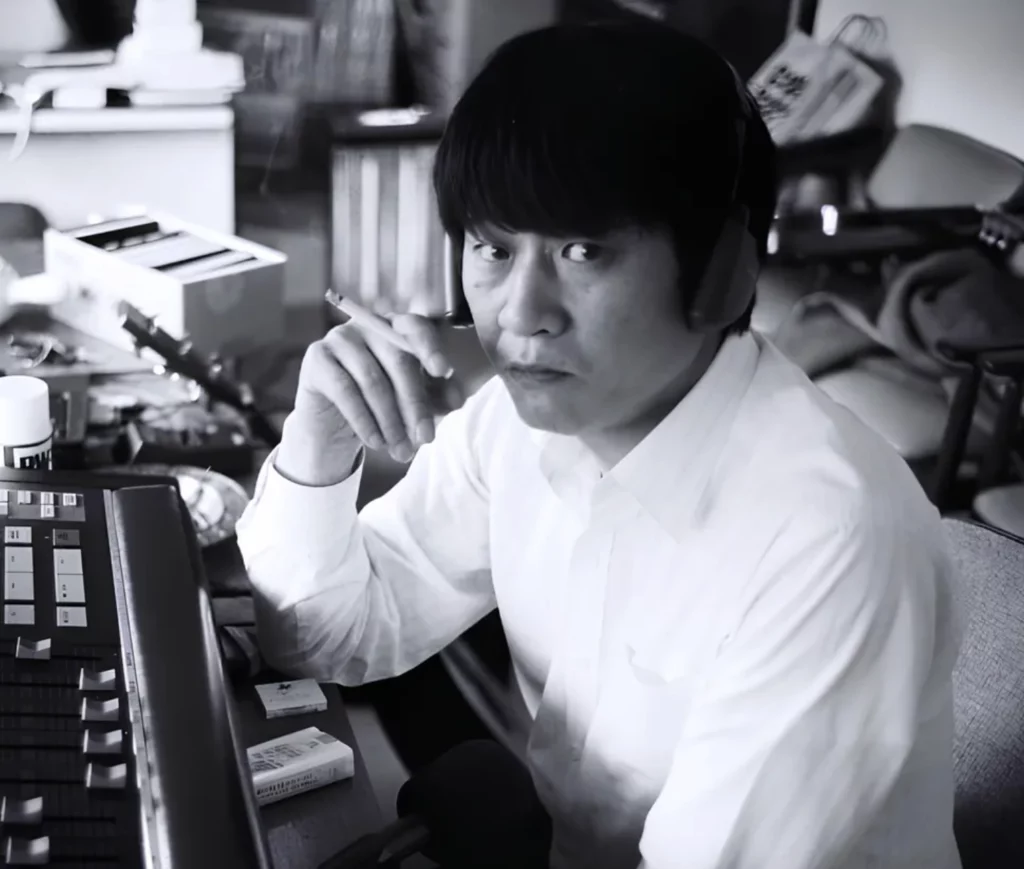
Kim Min-ki resistance music shaped Korean cultural identity through a unique blend of artistic defiance and emotional resonance, creating a cultural blueprint that continues to influence both contemporary K-pop and global protest movements through authentic storytelling and symbolic expression.
How Kim Min-ki’s Artistic Journey Redefined Korean Cultural Expression
When international fans discover K-pop today, they’re often amazed by its polished production and emotional storytelling. What many don’t realize is that this depth didn’t appear overnight – it has roots in revolutionary artists like Kim Min-ki who shaped Korean music during one of the country’s most challenging periods.
Listening to Kim Min-ki’s music for the first time feels like uncovering a secret history of Korea. His songs aren’t just beautiful compositions – they’re coded messages that spoke truth to power during South Korea’s military dictatorship era of the 1970s and 80s. Unlike today’s carefully marketed K-pop productions, Kim’s journey began in small university cafes and underground venues where young Koreans gathered to share dreams of democracy.
His iconic song “Morning Dew” (아침이슬), released in 1971, exemplifies his genius. On the surface, it’s a poetic reflection on nature, but to Koreans living under authoritarian rule, it represented a powerful call for democratic awakening. The genius was in the subtlety – government censors couldn’t ban nature imagery, yet listeners immediately understood the deeper meaning.
This artistic resistance came with serious consequences. After creating the musical “Badak” (Floor) in 1975, which highlighted the harsh conditions faced by factory workers, Kim was blacklisted by the government. His music disappeared from radio, his performances were banned, and he faced constant surveillance. Yet what’s remarkable is how he transformed these restrictions into creative opportunities, shifting to theater and film scoring when direct musical performance became impossible.
It’s fascinating to see how younger K-pop producers today often acknowledge Kim’s emotional authenticity as an influence. Even those creating upbeat dance tracks seem to draw from how Kim’s work connected music to genuine human experience. This trans-generational impact is perhaps his most significant legacy to Korean music.
The Musical Elements That Made Kim Min-ki’s Protest Songs Unforgettable
What strikes me most about Kim Min-ki’s music is how he created protest songs that stand as artistic masterpieces in their own right. Unlike much political music that sacrifices aesthetics for message, Kim’s compositions maintain extraordinary beauty while carrying profound meaning.
His songwriting approach combines deceptively simple melodies with traditional Korean pentatonic scales, creating an immediate emotional connection with listeners. This accessibility was strategic – Kim understood that for resistance music to be effective, it needed to be singable by ordinary people in everyday settings.
The Sound Archive at the Korean Democracy Memorial houses fascinating recordings of Kim’s songs being spontaneously performed at protests during the 1980s. Archival footage shows thousands of demonstrators singing “Morning Dew” in unison, creating powerful moments of collective identity. One particularly moving video from the 1987 June Uprising captures students facing riot police while singing Kim’s lyrics with unwavering determination.
Beyond the political context, Kim’s compositions demonstrate remarkable musical sophistication. He often uses minor keys and subtle key changes to create emotional tension, while his lyrics employ natural imagery as metaphors for human struggle. These techniques create songs that resonate on multiple levels simultaneously – as beautiful music, as political statements, and as cultural touchstones.
Many contemporary K-pop ballads, even from the biggest idol groups, seem to employ similar emotional techniques – starting with sparse instrumentation that builds to a powerful climax, using metaphorical lyrics that can be interpreted on multiple levels, and focusing on authentic emotional expression. This likely isn’t coincidental, but rather reflects the enduring influence of Kim’s musical vocabulary on Korean popular music.
Beyond Music: How Kim Min-ki Influenced Multiple Creative Fields
What fascinates me about Kim Min-ki is how his influence transcended music to impact Korean culture across multiple dimensions. When the government banned his music in the mid-1970s, rather than being silenced, he channeled his creativity into theater, film scoring, and literature – becoming a true renaissance figure in Korean arts.
His theatrical productions broke new ground in addressing social issues that were otherwise censored in public discourse. His 1978 collaboration with playwright Park Jo-yeol, “Factory Girls,” was revolutionary in highlighting the experiences of female factory workers during Korea’s industrial development. At a time when labor issues were highly sensitive politically, Kim found ways to tell these stories through art when direct journalism was impossible.
This multidisciplinary influence can be seen throughout contemporary Korean culture. When “Parasite” director Bong Joon-ho accepted the Palme d’Or at Cannes in 2019, he specifically mentioned Kim Min-ki as an inspiration for how to address social issues through art without being didactic. This connection between Kim’s work in the 1970s and Korea’s current global cultural breakthrough demonstrates his lasting impact.
What’s particularly interesting is how Kim’s work continues to find new audiences through unexpected cultural connections. After BTS’s RM mentioned Kim Min-ki in a VLive broadcast a few years ago, searches for Kim’s music spiked dramatically on Korean streaming platforms as younger fans discovered his work. This pattern of rediscovery continues to introduce his music to new generations.
The cultural DNA that Kim helped establish – addressing social issues through sophisticated artistic expression rather than direct statement – can be seen throughout Korean cultural exports today. From K-dramas that explore class inequality to K-pop songs that contain subtle social commentary beneath their catchy melodies, this approach of embedding meaning within accessible art forms remains distinctly Korean.
Kim Min-ki’s Music in Global Context: Resistance Artists Who Changed Their Cultures
When I study global protest music, I’m struck by the parallels between Kim Min-ki and other iconic resistance musicians around the world. Perhaps his closest international counterpart was Chile’s Victor Jara, who similarly used folk-inspired music to challenge military dictatorship. Both artists combined traditional musical elements with contemporary political messaging, though Jara was tragically murdered by the Pinochet regime in 1973 while Kim survived his period of persecution.
Another fascinating parallel exists with Portugal’s José Afonso, whose song “Grândola, Vila Morena” became the secret radio signal that launched the 1974 Carnation Revolution. Like Kim’s “Morning Dew,” Afonso’s composition used seemingly innocent folk imagery to convey revolutionary ideas, demonstrating how similar artistic strategies emerged independently in different authoritarian contexts.
What distinguishes Kim from many Western protest singers is the environment in which he created. Artists like Bob Dylan operated in democratic societies with legal protections for free speech, while Kim worked under genuine threat of imprisonment. This fundamental difference shaped their artistic approaches – where Dylan could be explicitly political, Kim developed sophisticated metaphorical systems that protected both himself and his audience.
What stands out about Kim’s career trajectory is how he managed to sustain his artistic relevance beyond Korea’s democratic transition. Many protest singers worldwide struggled to adapt once the specific political conditions they opposed changed. Kim, however, successfully evolved his artistic focus to address new social issues in democratic Korea, demonstrating remarkable adaptability while maintaining his core artistic identity.
This longevity and evolution separate Kim from many of his international counterparts and highlight what makes his contribution to global resistance music particularly significant. Unlike one-note political artists, Kim crafted a sustainable artistic identity that transcended specific political moments while maintaining a consistent moral center.
Why Kim Min-ki Still Matters in Today’s K-Culture Landscape
In contemporary Korean society, where global K-pop dominates cultural conversations, Kim Min-ki’s work maintains a unique and vital relevance. During the massive 2016-2017 Candlelight Protests that led to President Park Geun-hye’s impeachment, protestors across generations spontaneously performed “Morning Dew” at rallies, creating powerful connections between historical and contemporary movements for democratic accountability.
This ongoing cultural significance reflects how Kim’s work addresses universal themes that transcend specific political moments. While Korea has transformed dramatically since the authoritarian era, the core values in Kim’s music – dignity, justice, and authentic expression – remain deeply relevant to contemporary social concerns.
The connection to today’s K-pop might not be immediately obvious, but industry insiders recognize the lineage. Many Korean music industry professionals point to Kim’s emotional authenticity as a foundation for what makes Korean music distinctive in the global marketplace. The emphasis on sincere emotional expression that characterizes the best K-pop ballads draws from the same well as Kim’s work – the ability to communicate complex feelings through accessible musical forms.
What’s particularly meaningful is how Kim’s legacy offers an alternative narrative to the sometimes reductive international view of K-pop as merely commercial entertainment. His work reminds both domestic and international audiences that Korean popular culture contains rich traditions of artistic integrity and social consciousness alongside its commercial appeal.
For young Korean artists today who want to address contemporary issues like inequality, climate change, or social justice, Kim’s approach provides a valuable template – how to create art that is both accessible and meaningful, entertaining and profound. This balance between accessibility and substance remains a defining characteristic of the most enduring Korean cultural exports.
Preserving Legacy: Kim Min-ki’s Continued Influence on New Generations
One of the most fascinating aspects of following K-culture developments is observing how Kim Min-ki’s work continues to inspire new generations of Korean artists. The Kim Min-ki Cultural Foundation has made significant efforts to ensure his music remains accessible to young Koreans, digitizing his catalog and creating educational programs that contextualize his work for students who grew up in a democratic Korea.
What’s most exciting is seeing how contemporary artists reinterpret his work for new contexts. Alternative K-pop group Leenalchi’s recent reinterpretation of “Morning Dew” brilliantly fuses traditional Korean sounds with modern production, introducing Kim’s music to Generation Z listeners while preserving its emotional core. These creative reinterpretations ensure his work remains living culture rather than museum artifacts.
International recognition has also grown significantly in recent years. At the Korean Film Archive’s special program at the Berlin International Film Festival recently, international attendees showed surprising interest in the screenings of films with Kim Min-ki’s scores. This growing global appreciation situates his work within broader conversations about artistic resistance to authoritarianism worldwide.
For aspiring Korean artists today, Kim’s career offers valuable lessons in artistic integrity and evolution. His example demonstrates that meaningful art can emerge from even the most restrictive conditions, and that artists can maintain relevance across changing social landscapes by adapting their focus while maintaining their core values.
As Kim himself wrote in his memoir, “The specific enemies may change, but the need for art that speaks truth to power never disappears.” This observation encapsulates why his work continues to resonate with both creators and audiences in Korea and beyond. In a cultural landscape increasingly dominated by algorithmic recommendations and viral trends, Kim’s authentic artistic voice reminds us of music’s enduring power to create meaning and build community.
When we consider K-culture’s spectacular global rise, it’s worth remembering the foundations laid by artists like Kim Min-ki. The emotional depth, social awareness, and artistic sophistication that characterize the best Korean cultural exports today didn’t appear from nowhere – they emerged from a rich tradition of artists who, even in the most challenging circumstances, insisted on creating work that was both beautiful and meaningful.
Reflecting on Resistance Music’s Evolution
As we consider Kim Min-ki’s legacy, it’s worth reflecting on how resistance music continues to evolve in different cultural contexts. Each society produces artists who speak truth to power through their unique artistic vocabulary, whether through folk traditions, hip-hop, rock, or emerging digital forms. The technological landscape may change, but the fundamental human desire to express resistance through art remains constant.
Though the specific challenges facing society evolve over time, Kim Min-ki’s approach to creating meaningful art under difficult circumstances provides inspiration for creative expression that transcends its immediate historical moment. His work reminds us that the most powerful artistic voices often emerge from the most challenging circumstances, and that beauty and resistance need not be separate artistic pursuits.